What's PPP and what has it got to do with the big mac?
I did this activity with 307/8 geography lessons, where they were given the profile of different families' food consumption and preferences in one week. Among the write-up, the amount of money spent on each food types by the family is stated.
But there's a catch.
The write-up wrote "PPP" in the amount of money spent. What's that?
PPP stands for "purchasing power parity". Before you hurl vulgarities at me for introducing such a cheem term, let me explain and you'll realise that it is actually something very easy to understand.
We've all learnt purchasing power, right? It defined as the amount of money people have to buy stuff. So if someone has more money, he or she can buy more stuff right?
Not exactly right. Now let's say my income is $3 sing dollars. That will buy me a bowl of noodles in Singapore right? But if I were to earn the same amount in Bangkok, I can have 3 bowls of noodles, as each bowl cost only S$1. Therefore, for the same amount of money, I can buy more things in Bangkok than in Singapore. Hence, I have a higher purchasing power in Bangkok than in Singapore, even though I have the same income in both places.
So as we can see, looking at money alone doesn't determine purchasing power. We have to look at the value of goods too. So how do we adjust all these?
This is where Purchasing Power Parity (PPP) comes in. Economists realised this problem and decided that ok, we'll try to adjust the purchasing power by comparing the amount of money needed to buy the same few goods (or basket of goods, as they like to call it). From there, we'll compare and see which places have a higher purchasing power for the same amount of money and adjust it accordingly.
So what does this means?
Let's say the basket of goods consist of only a bowl of noodles (same portion, same ingredients, everything same!). In Singapore, it cost S$3. In Bangkok, it cost S$1. So therefore, the same amount of money in Bangkok have 3 times the purchasing power than Singapore right?
So they'll adjust the money accordingly to reflect this accurately.
Before adjustment,
Income in Singapore: S$3
Income in Bangkok, S$3
But there's a catch.
The write-up wrote "PPP" in the amount of money spent. What's that?
PPP stands for "purchasing power parity". Before you hurl vulgarities at me for introducing such a cheem term, let me explain and you'll realise that it is actually something very easy to understand.
We've all learnt purchasing power, right? It defined as the amount of money people have to buy stuff. So if someone has more money, he or she can buy more stuff right?
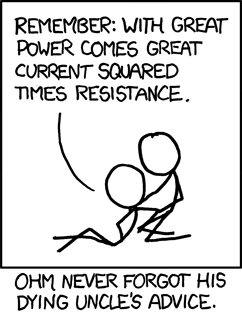
oops the wrong power
Not exactly right. Now let's say my income is $3 sing dollars. That will buy me a bowl of noodles in Singapore right? But if I were to earn the same amount in Bangkok, I can have 3 bowls of noodles, as each bowl cost only S$1. Therefore, for the same amount of money, I can buy more things in Bangkok than in Singapore. Hence, I have a higher purchasing power in Bangkok than in Singapore, even though I have the same income in both places.
So as we can see, looking at money alone doesn't determine purchasing power. We have to look at the value of goods too. So how do we adjust all these?
This is where Purchasing Power Parity (PPP) comes in. Economists realised this problem and decided that ok, we'll try to adjust the purchasing power by comparing the amount of money needed to buy the same few goods (or basket of goods, as they like to call it). From there, we'll compare and see which places have a higher purchasing power for the same amount of money and adjust it accordingly.
So what does this means?
Let's say the basket of goods consist of only a bowl of noodles (same portion, same ingredients, everything same!). In Singapore, it cost S$3. In Bangkok, it cost S$1. So therefore, the same amount of money in Bangkok have 3 times the purchasing power than Singapore right?
So they'll adjust the money accordingly to reflect this accurately.
Before adjustment,
Income in Singapore: S$3
Income in Bangkok, S$3
After PPP adjustment,
Income in Singapore (PPP) : S$3
Income in Bangkok (PPP): S$9
Income in Bangkok (PPP): S$9
As you can see, with PPP adjustment, we can accurately reflect that Bangkok has 3 times the purchasing power than in Singapore, as the cost of the same group of stuff in Bangkok is 1/3 the price of that in Singapore.
So therefore, when we compare both money in 2 different places, if it is adjusted for PPP, we can more or less assume that the same amount of money can buy the same amount of stuff. If one place's income appears to be higher after PPP adjustment, it doesn't mean that the person earns more, but it means he/she have a higher purchasing power to buy more stuff.
Get it so far?

Now what has it got to do with the Big Mac?
Well, the magazine, "The Economist", decided to use an informal way to calculate PPP. They call it the "Big Mac Index".
What happens was that since the Big Mac is the same everywhere in the world, it should cost and be sold at the same price. So if there is a difference in price, it would reflect the difference in purchasing power! It's like what I did to Bangkok and Singapore, just that you substitute with the bowl of noodles with the Big Mac!
Are you hungry yet?
So therefore, when we compare both money in 2 different places, if it is adjusted for PPP, we can more or less assume that the same amount of money can buy the same amount of stuff. If one place's income appears to be higher after PPP adjustment, it doesn't mean that the person earns more, but it means he/she have a higher purchasing power to buy more stuff.
Get it so far?
Now what has it got to do with the Big Mac?
Well, the magazine, "The Economist", decided to use an informal way to calculate PPP. They call it the "Big Mac Index".
What happens was that since the Big Mac is the same everywhere in the world, it should cost and be sold at the same price. So if there is a difference in price, it would reflect the difference in purchasing power! It's like what I did to Bangkok and Singapore, just that you substitute with the bowl of noodles with the Big Mac!
Are you hungry yet?
Labels: : 306 geog elect, : 307/8 pure geog, # development, # geog of food
posted by mr luo at
09:53
0 Comments